

.png)
Seventy three years ago Tenzing Norgay stood on top of Everest, known as Chomolungma in Tibetan, which roughly translates as “Goddess Mother of the World”.
A new biopic of Norgay’s life and that first ascent, along with Edmund Hillary, of the highest mountain in the world portrays beautifully, and with compassion, his humility, and intimate bond with nature and the mountains. In some ways, however, the most spectacular star of the film is the majestic and awe-inspiring mountain landscapes captured so beautifully by the sweeping cinematography.
I am a mountaineer and glaciologist by profession and have an affinity for wild, open and vertiginous landscapes. The film made me wonder what Tenzing would think if he could return to the mountain today. How have things changed in the intervening years and what does that mean for the future of mountaineering and Alpine climbing?
Everest Base Camp (EBC) is a very different scene now. Instead of a single, admittedly gargantuan, expedition each year, the Nepalese government now issues many permits and, at peak season, base camp is a sea of tents, people and too often rubbish left behind by climbers.
That’s quite sad and a far cry from what the 1953 expedition would have experienced, but so are the conditions and health of the Khumbu glacier which provides access to EBC and the start of the real climbing.
A recent study used declassified spy-satellite imagery to compare loss of ice mass across the Himalayas between the 1970s and the 2000s. They found that the rate of loss had doubled in the period 2000-2016 compared to the early epoch. They estimated the rate of thinning at the altitude of EBC was about 0.8 metres per year. The glacier is around 150 metres thick in the region below base camp. At the rate of thinning observed a decade ago it would lose about a third of its volume in 73 years exposing more and more loose and unstable rock.
However, my own work, with colleagues indicates that the acceleration in mass loss across the Himalaya has continued since 2016 to reach even higher rates. Google Earth imagery over the Khumbu glacier from 2021 shows extensive development of lakes on the ice surface: a sure sign of a glacier in decline. The lakes absorb more solar radiation than the surrounding ice and accelerate melt. There are, of course, no satellite images from 1953 but plenty of analogue photographs were taken and the changes are clear to see: now it’s more chaotic, more broken and more covered in debris.
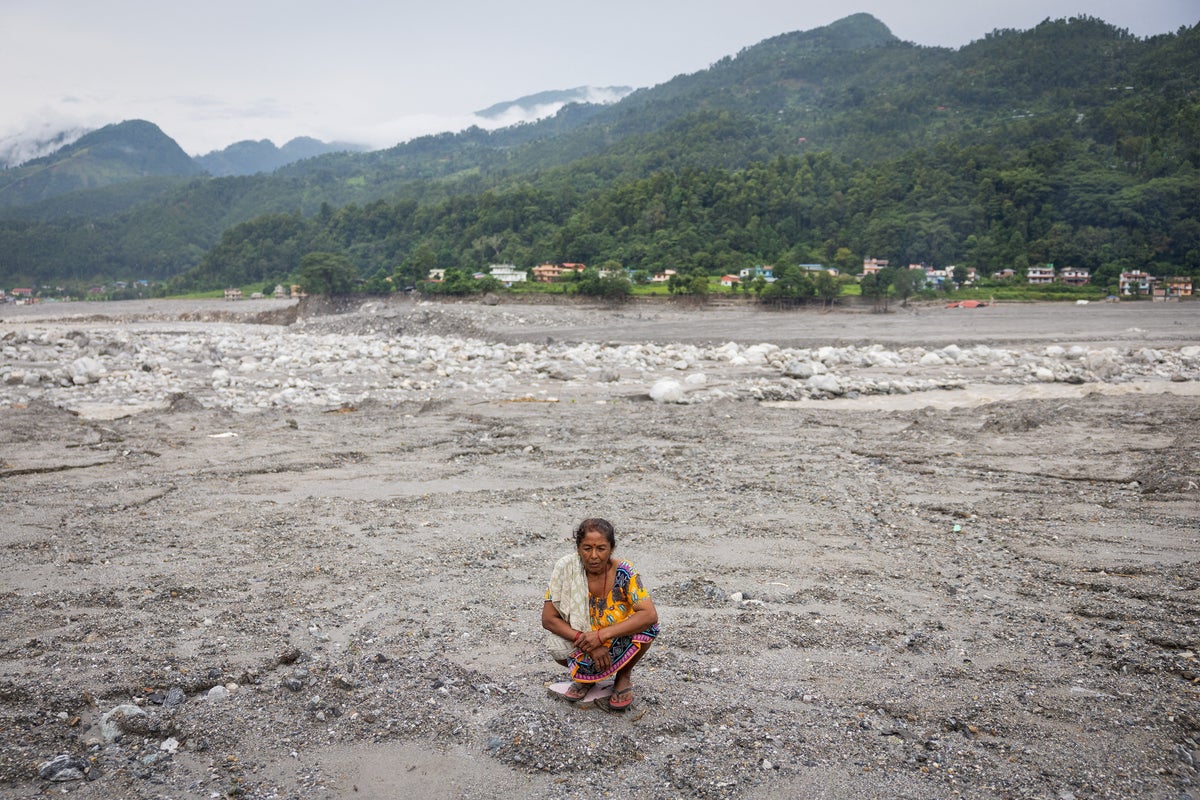
The cause of the recent catastrophic flood event close to the Nepal/Tibet border has been linked to increasing regional temperatures, weakening permafrost (frozen ground that thaws with warming) and greater glacier melt rates.
In the European Alps the situation feels even more dire. In just two years from 2022-2023 glaciers in the Swiss Alps lost 10% of their volume. If that rate was sustained, they would be gone in 20 years time.
This year, mountain huts closed and guides stopped taking clients up the “normal” routes on the Matterhorn and Mont Blanc because it was too dangerous due to the high temperatures and the consequent increased rockfall.
Many other routes were being avoided because of the dangerous rockfall conditions. The first six months of 2026 were the third warmest on record and it is no wonder that glaciers, and the frozen world is responding to this level global heating .
In August 1990 I climbed perhaps the most iconic and well known route in the Alps: the north face of the Eiger. The photo below shows me on a section called the second icefield, a crucial part of the original 1938 route that gains you access to the upper face and the ominously named Death Bivouc. The icefield no longer exists, and no one who wants a relatively safe passage climbs the route in summer. The recommended climbing season now is late winter or early spring to avoid the rotten rock and dangerous conditions that summer brings. Thus, in my short mountaineering career, I have seen unprecedented changes on famous Alpine routes and a transforming landscape in the high mountains.
What does this mean for the future of mountaineering and glaciers? Based on current climate policies, the European Alps, western Canada and the US, Scandinavia and other regions are expected to lose about 90-100% of their mass by 2100.
That’s just 74 years away, roughly the time between that first ascent of Everest and now. It will have a dramatic impact on the mountain landscape, ecosystems, tourism, beauty and natural hazard exposure of these, once pristine, mountain environments.
EBC has not been beautiful or pristine for many years, perhaps less because of global heating and more to do with the reckless attitude of some of the expeditions that visit. I wonder what Tenzing would have made of the changes to both the landscape and attitudes that have occurred since his historic and heroic first ascent of Everest, the sacred “Goddess Mother of the World”?
Jonathan Bamber receives funding from the EC, the European Space Agency and Technical University Munich.

 (1).jpg)
 (1).jpg)
 (1).jpg)
 (1).jpg)